⚠️For informational purposes only. Do not consume, handle, or apply any plant for medical purposes based on this profile alone. Always consult a qualified expert. Poison Control: 1-800-222-1222. Full disclaimer →
Purple Pitcher Plant
📚 Sarracenia purpurea
📍 Eastern and central North America, from Canada to the Gulf Coast, and in the Great Lakes region.
The Purple Pitcher Plant is a striking carnivorous perennial native to eastern North America. Its unique, hooded pitchers collect rainwater and attract insects, which are then dige…
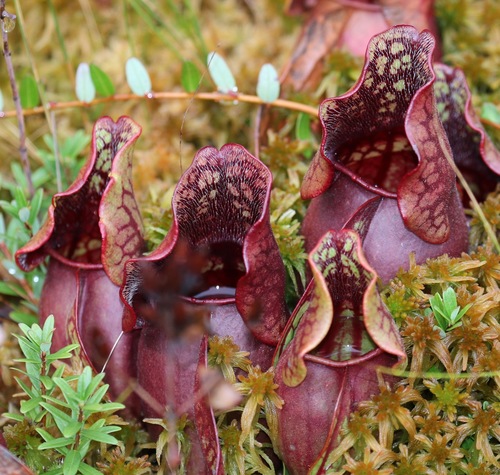
The Purple Pitcher Plant is a striking carnivorous perennial native to eastern North America. Its unique, hooded pitchers collect rainwater and attract insects, which are then digested for nutrients. This plant thrives in boggy, acidic environments and is a fascinating addition to any wetland garden.
💚Health & Benefits
✓ Medicinal🐝 Pollinator Friendly✓ Safe for Humans🐾 Pet Safe
Naturally controls insect populations without chemicals, making it a great pest management tool. Its unusual appearance adds visual interest and serves as an educational specimen f…
Naturally controls insect populations without chemicals, making it a great pest management tool. Its unusual appearance adds visual interest and serves as an educational specimen for studying carnivorous plants.
⚠️Harmful or Dangerous
⛔ Contains Toxins
Not for consumption; handle with care as the plant produces digestive enzymes that may irritate skin.
📖Known Uses
Historically used by Native Americans for various ailments, including as a poultice for wounds and a tea for digestive issues, though modern use is limited and not recommended with…
Historically used by Native Americans for various ailments, including as a poultice for wounds and a tea for digestive issues, though modern use is limited and not recommended without expert guidance.
Generally pest-free, but can suffer from aphids or spider mites in cultivation; avoid over-fertilizing as it can harm the plant.
🌱Care Instructions
🪨 Soil: acidic, nutrient-poor, moist peat or sphagnum moss
Full sun to partial shade; keep soil consistently moist with distilled or rainwater; use nutrient-poor, acidic soil like sphagnum peat moss; tolerate cold winters, protect from ext…
Full sun to partial shade; keep soil consistently moist with distilled or rainwater; use nutrient-poor, acidic soil like sphagnum peat moss; tolerate cold winters, protect from extreme heat.
✂️ Propagation
Propagate by seed (requires cold stratification) or by division of rhizomes in early spring.
⚖️Known Legal Restrictions
✓ No specific legal restrictions on record
Always verify with your local extension office or county regulations before planting, harvesting, or selling any plant commercially. Rules vary by state and municipality.